https://leafw-blog-pic.oss-cn-hangzhou.aliyuncs.com/avatar.jpg

The Collective Boos at AI During U.S. Commencement Ceremonies

At some U.S. university commencement ceremonies last week, the audience started booing as soon as speakers praised AI. The speakers may have been surprised, but I think many ordinary workers and students like us can understand the reaction.

Commencement is already a delicate occasion. In the audience are young people about to enter the job market. Many may still carry tuition debt, have just sent out resumes, and may not have stable internships or full-time offers. On stage, the guests are often already successful. They begin, in a relaxed tone, to tell students: AI is the future, and you should embrace change.
Coursera and Udemy Merge: AI Is Reshaping Online Education

On May 11, 2026, online education platform Coursera announced that it had completed its merger with Udemy. The combined company will continue to use the Coursera name and trade on the New York Stock Exchange under the ticker COUR. Udemy shares will be delisted from Nasdaq.

According to the official announcement, the combined platform reaches more than 290 million learners, 18,000 enterprise customers, 95,000 content creators, over 315,000 courses, and hundreds of university and industry partners.

OpenAI and Microsoft Officially “Break Up”: The Most Important Alliance of the AI Era Finally Unbundles

https://leafw-blog-pic.oss-cn-hangzhou.aliyuncs.com/blog/openai-microsoft-20260428/openai-microsoft-2026.png

On April 27, 2026, OpenAI and Microsoft released statements at the same time: the two companies had revised their partnership agreement.

You could call it a “breakup.” The reason is not hard to understand. Microsoft no longer has exclusive licensing rights to OpenAI’s models and products. OpenAI can offer products on any cloud platform. Microsoft will also stop paying revenue share to OpenAI. For the past few years, these two companies were almost treated as one AI camp. Now there is suddenly a line between them, and that is big news.

I Used AI to Write a DeepSeekV4 Paper Review, but I Do Not Think I Should Publish It

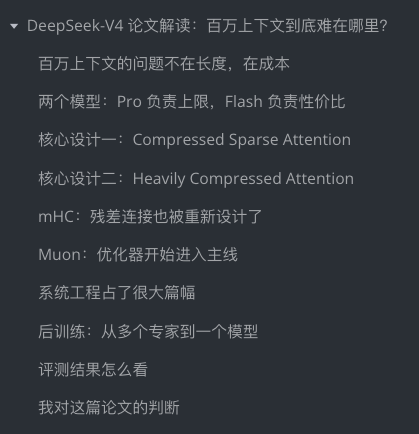
I just used AI to write a paper review of DeepSeek-V4.

The workflow was smooth. I dropped the PDF in, asked AI to extract the content, organize the structure, generate illustration ideas, and then turn everything into a technical blog post that looked fairly complete. The key innovations and the interpretation of evaluation results were both pretty decent. I put the outline below. It looks quite good, doesn’t it?

https://leafw-blog-pic.oss-cn-hangzhou.aliyuncs.com/screenshot_1777095270.png

The Collective Retreat of AI Coding Subscriptions: From Carnival to Tightening in One Quarter

A Shutdown Notice

On April 20, GitHub published a blog post with a restrained title: “Changes to GitHub Copilot Individual Plans.” The content was much less restrained:

  • New signups for Pro, Pro+, and Student plans were paused
  • Usage limits were tightened through both session limits and weekly limits
  • Claude Opus was removed from the Pro plan

The reason was direct: agentic workflows were consuming far more compute than expected, and “a small number of requests can now cost more than the subscription price itself.”

I Paused Vibecoding for a Month

How I Stopped

Over the past few months, I had been using vibecoding almost obsessively. The term has become common enough by now: using AI to quickly build products, sometimes taking an idea from scratch to launch in just a few days, or even a few hours. I enjoyed that pace. I could have an idea at midnight, start coding the next day, and publish it over the weekend.

During that period I built two apps and a client somewhat like a combination of Lobehub and local Claude Code. The number was not huge, but the last one gave me the strongest sense of frustration.